Marcos unveils DPWH transparency portal to expose ‘ghost’ flood control projects
President Ferdinand Marcos Jr. on Nov 24, 2025, announced the launch of a new transparency portal aimed at exposing alleged “ghost” flood control projects and restoring public trust in government infrastructure spending.
During a press conference on November 24, Marcos described the initiative as the “next chapter” in his administration’s ongoing investigation into irregularities surrounding flood control projects.
Three-Phase Investigation
Marcos explained that the government’s response to the flood control controversy followed three phases: identifying questionable or non-existent projects, determining accountability, and instituting reforms to prevent recurrence.
He admitted that a major issue uncovered during the probe was the loss of transparency inside the government, which allegedly allowed irregularities to go unnoticed.
Portal Features: Public Access and Real-Time Monitoring
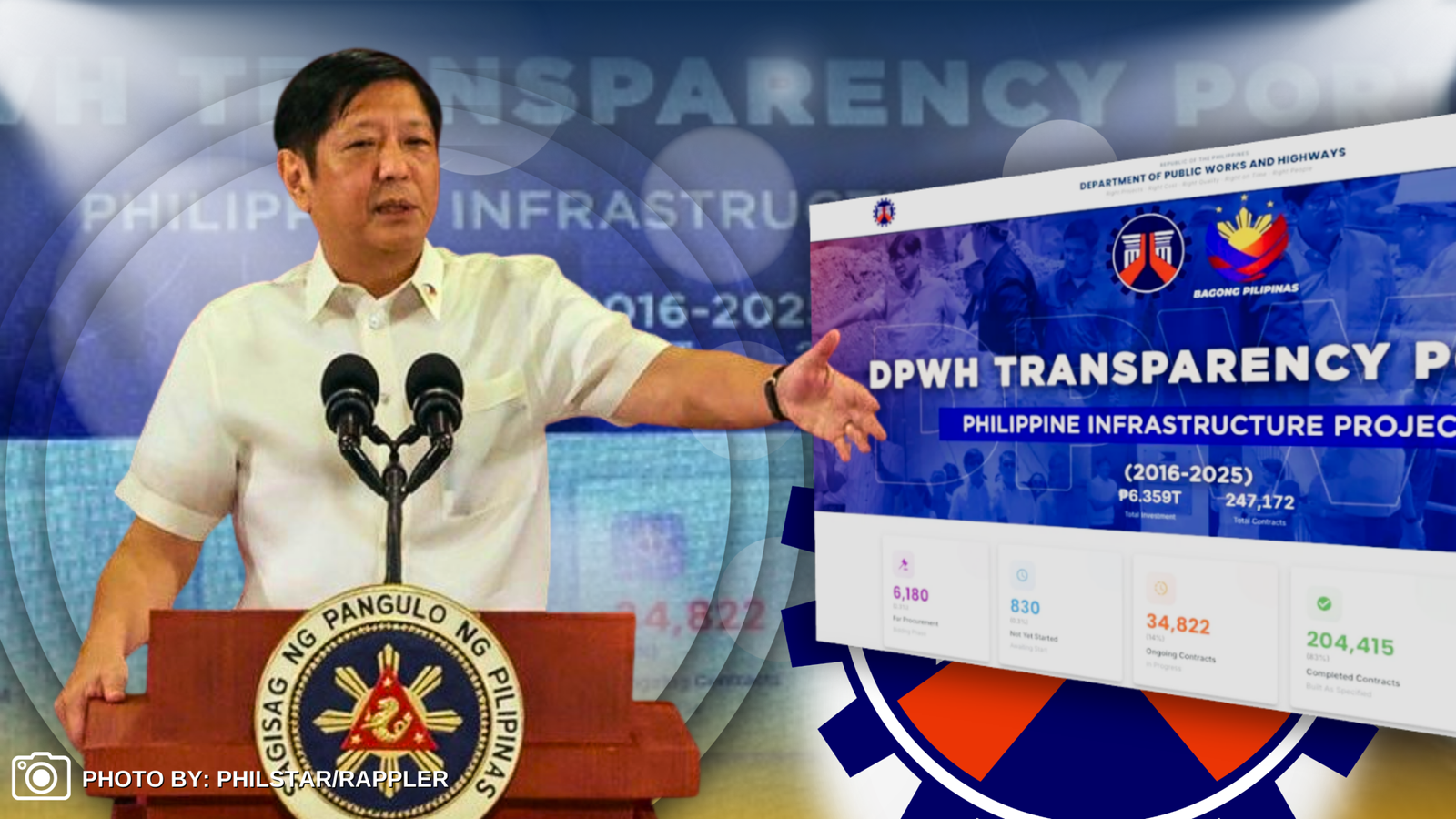
The newly launched portal under the Department of Public Works and Highways (DPWH) allows citizens to access detailed information about infrastructure projects nationwide.
Among its key features are: Project descriptions, budgets, and completion dates, geotagged photos from project start to completion, exact map locations of infrastructure sites, procurement details, including bidding timelines and winning contractors, and Downloadable official documents.
Marcos emphasized that every project uploaded to the portal includes geotagged photos to ensure traceability.
“If there is a ghost project, it will be easy to see,” he said, adding that transparency must come with accountability.
Satellite Imaging and AI Assistance
The portal also integrates satellite imaging in partnership with the Philippine Space Agency to provide visual monitoring of project progress.
Additionally, an AI-powered assistant can answer user queries in Filipino or English, making the system accessible even to non-technical users.
Citizens may also tag projects as completed, defective, unfinished, duplicate, or ghost, and file reports directly through the platform.
Marcos encouraged Filipinos to actively monitor projects in their communities.
“Sunlight is the best medicine, open everything up to the sunlight because the people need to know,” he said.
Live Bidding for Greater Accountability
Another feature of the portal is the live streaming of ongoing procurement activities, allowing the public to watch DPWH bidding processes in real time.
Marcos clarified, however, that pre-qualification stages conducted internally in offices would not be livestreamed, though anomalies would surface during formal bidding.
The President said the reform may also extend to other agencies such as the Social Security System and Philippine Health Insurance Corporation (PhilHealth).
Rebuilding Public Trust
Marcos acknowledged that public faith in government processes had eroded due to allegations of corruption but described the portal as an initial step toward restoring credibility.
“The Transparency Portal is not just a website. It is a promise,” he said.
He called on citizens to use the system to ask questions, report concerns, and monitor public spending.
Together, he added, the government and the public can build a “more organized and stable” Philippines grounded in accountability and openness.


awdawaw